Marcel Boucher
Marcel Boucher was born in France in 1898. After the First World War, he began his apprenticeship as a designer at Cartier in Paris, one of the most prestigious French jewelry houses. In the early 1920s, he moved to Cartier’s headquarters in New York City. During the Great Depression, the demand for luxury jewelry decreased, so Marcel found a work at Mazer Bros., jewelers who were experts in creating affordable copies of high-end jewelry. Fascinated by costume jewelry, he opened his own jewelry company with Arthur Halberstadt in 1937, calling it “Marcel Boucher and Cie.”
Boucher used “white metal”, metal alloys, in his creations, but with the United States’ entry into World War II, metals became scarce. At that point, Boucher began using silver in his works, even moving to Mexico for a short time to exploit the local silver. The line of his Mexican creations was called “Parisina”, and it is very sought after by collectors today.
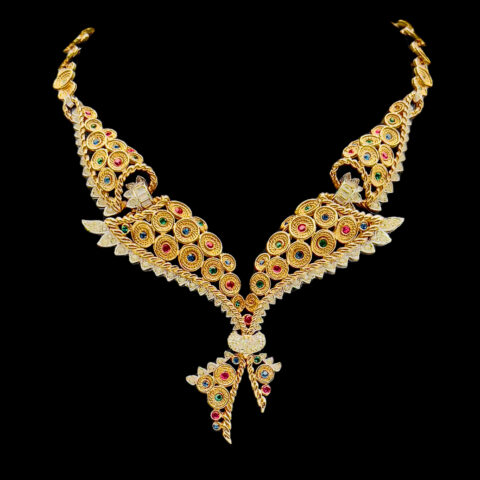
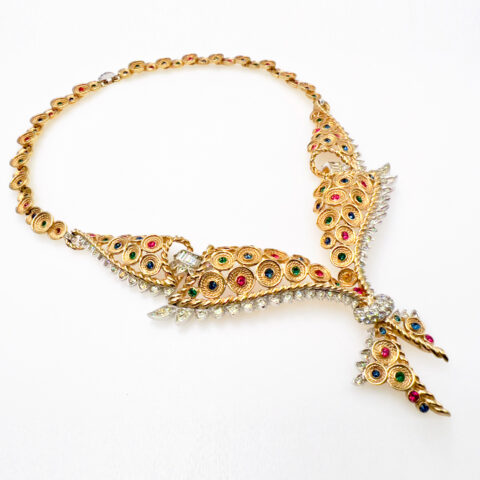
His brooches were often designed to appear three-dimensional, sometimes with several layers. Boucher’s creations featured intricate metalwork, faux stones that resembled precious gems, high-quality imitation pearls, and artistic, colorful enamels. These skills, especially his spectacular bold enamel pieces, such as brooches shaped like fruits, animals, and human figures, earned him fame and a large following. His magnificent pieces in the shape of fantastic birds were extraordinary, with vibrant enamels, richly colored stones and three-dimensional design. Marcel also loved mechanics and integrated moving parts into his jewelry. For example, the “Punchinello”, a court jester, raises his arms and legs when pulling a chain; a pelican opens its beak to catch a fish; and flower petals open and close in his “Night and Day” series of flowers.
He died in 1965, and his wife Sandra, also a talented jewelery designer, took over the reins of the company until 1970/72, when the business ceased.